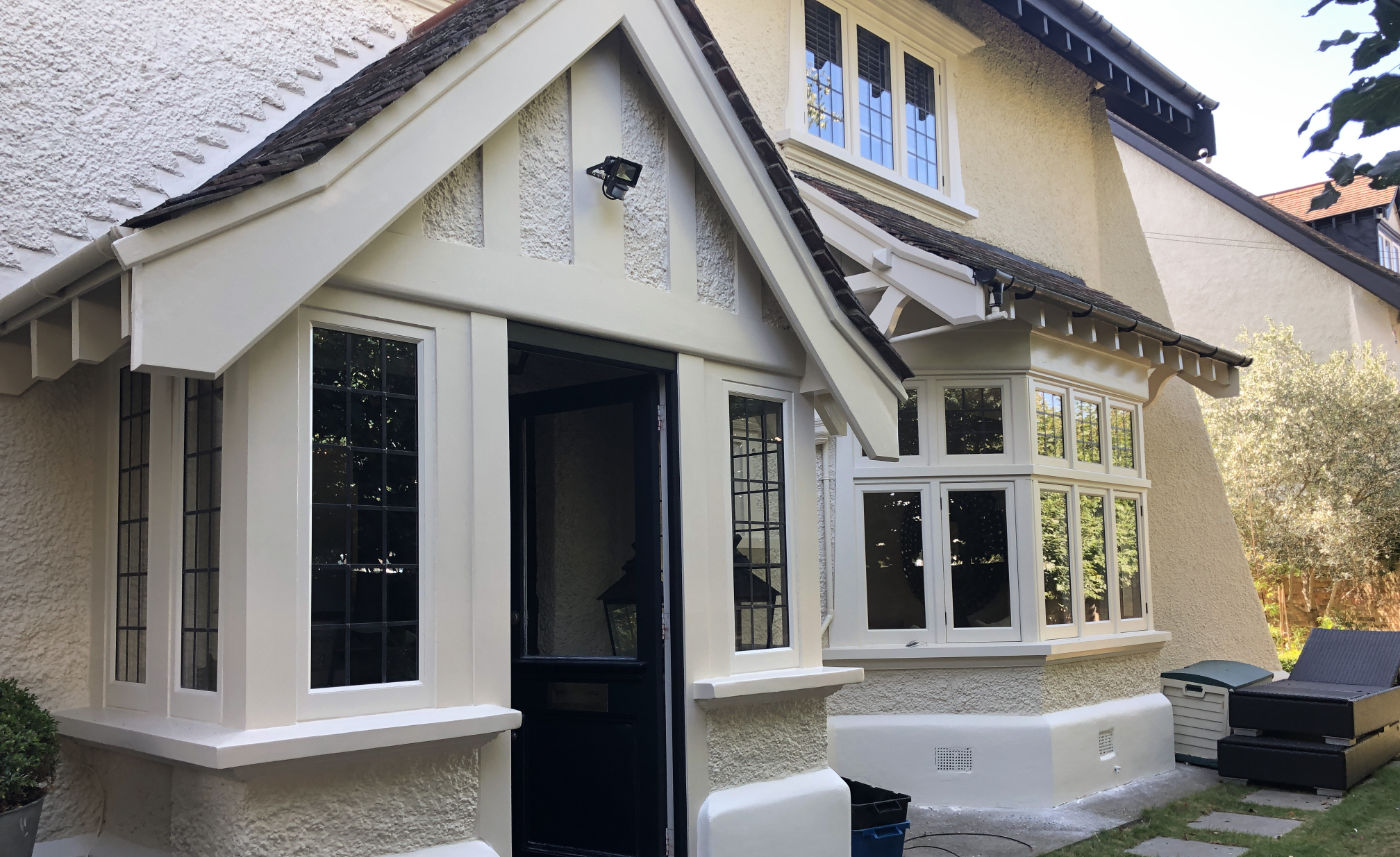

One of our Richmond upon Thames projects involved a distinctive Arts and Crafts property within the East Sheen Conservation Area.
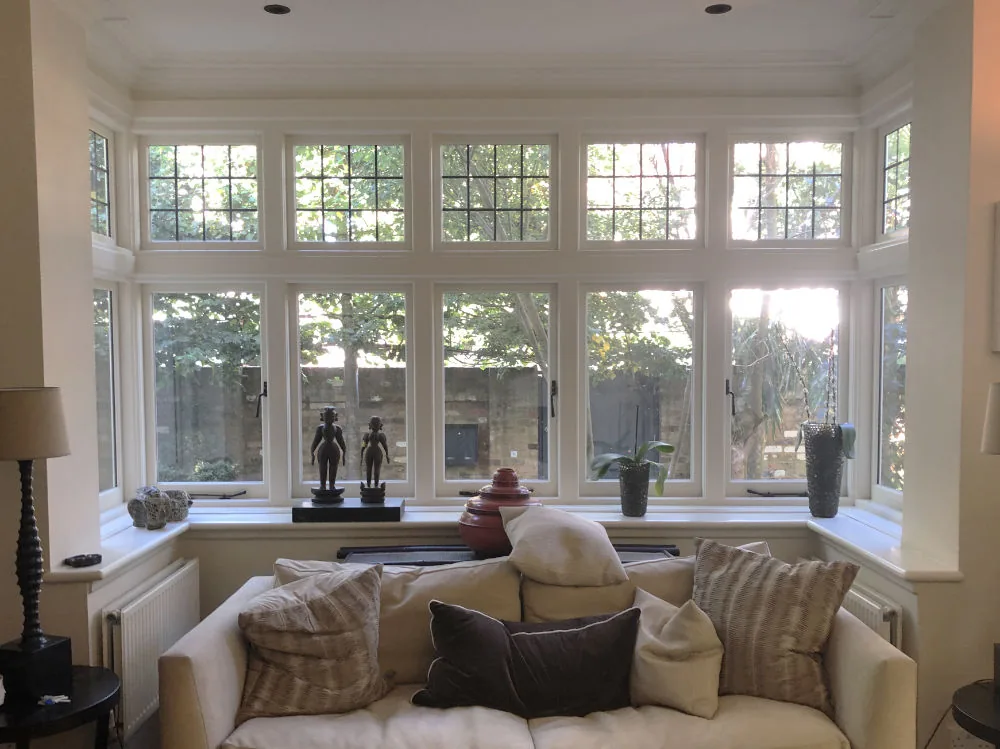
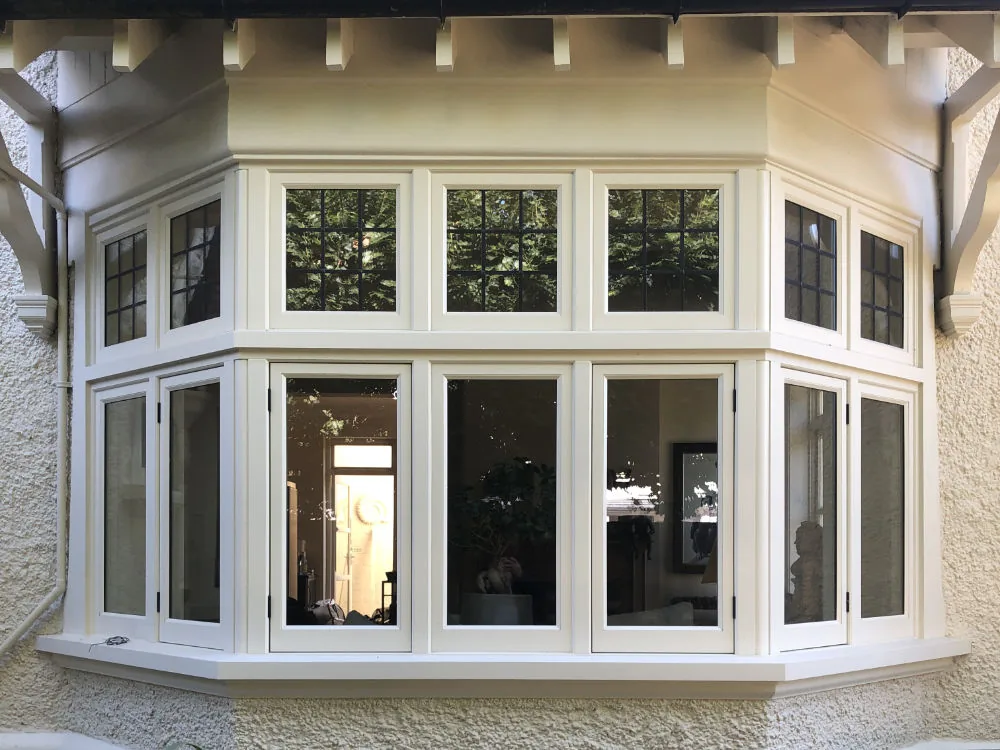
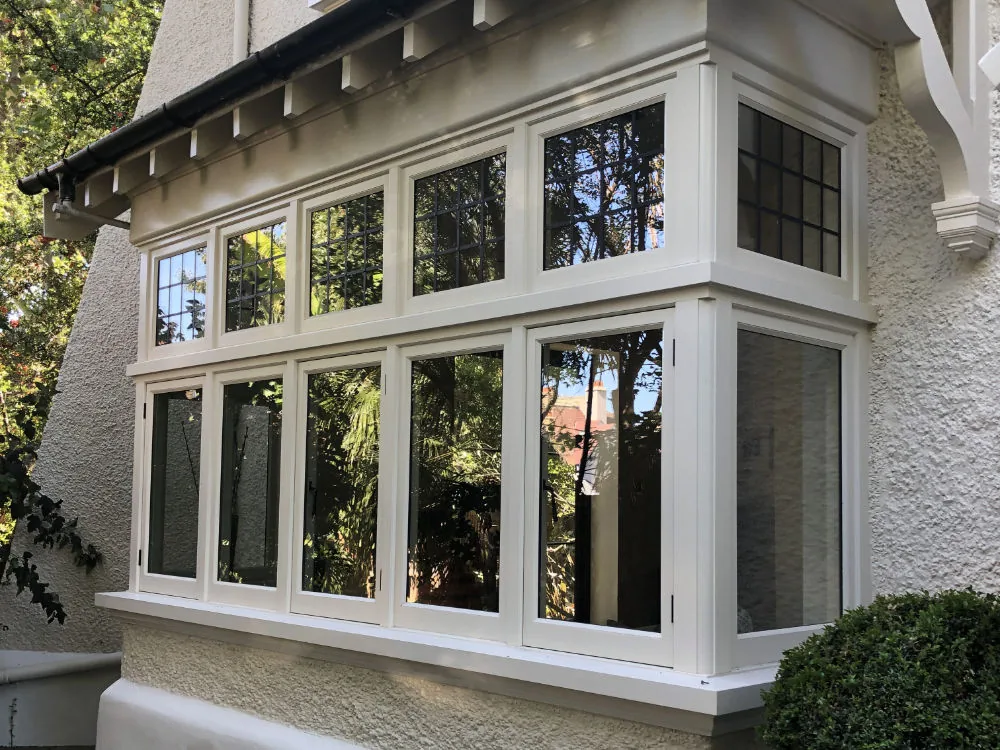
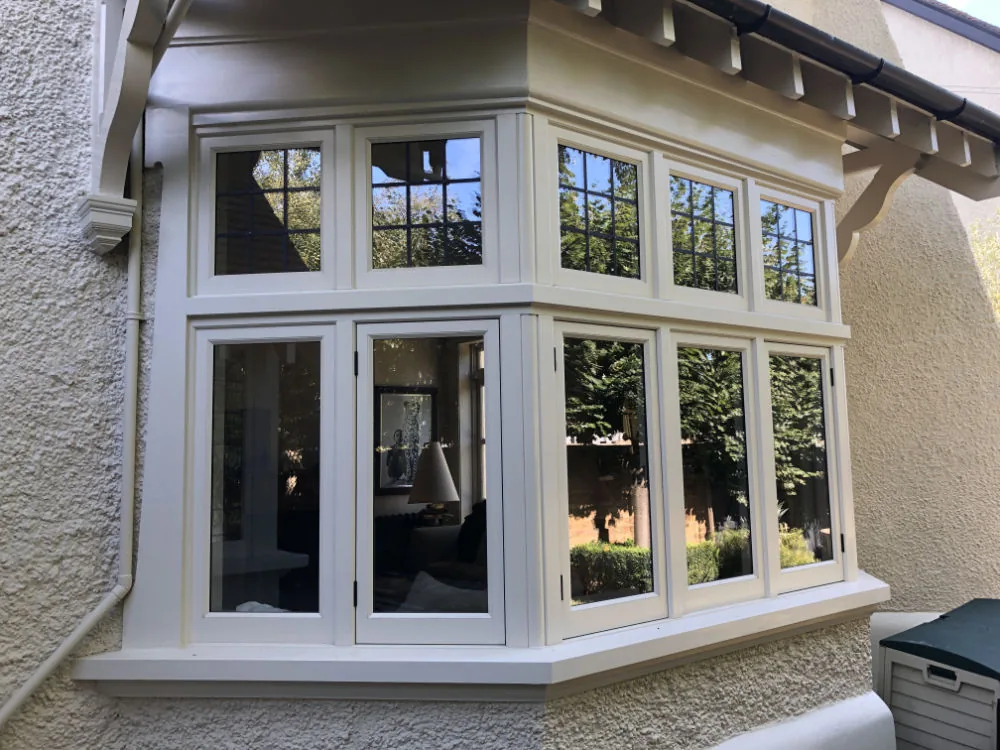
The first phase of the project centred on the faithful replacement of a number of the home’s timber casement windows and doors. The existing joinery incorporated numerous exposed timber mouldings and architectural details which contributed significantly to the Arts and Crafts character of the house.
Rather than simplifying these details, our replacement joinery was manufactured to retain them.
Accoya was used predominantly for the new windows and doors. Its durability and dimensional stability made it particularly suitable for the exposed mouldings and detailed external joinery incorporated into the designs.
The glazing required equally careful consideration.
Conventional modern double glazing can sometimes appear too heavy for older windows, particularly where fine glazing bars and decorative glass form part of the architecture.
We therefore used slim-profile heritage double glazing, allowing us to introduce the benefits of double glazing while maintaining glazing details and proportions appropriate to the property.
Traditional leaded lights were also incorporated into the new windows, retaining another important element of their original appearance.
The windows were finished in a colour matched to Farrow & Ball Oyster White, Light, creating a soft traditional finish that complemented both the architecture and the detailed timberwork.
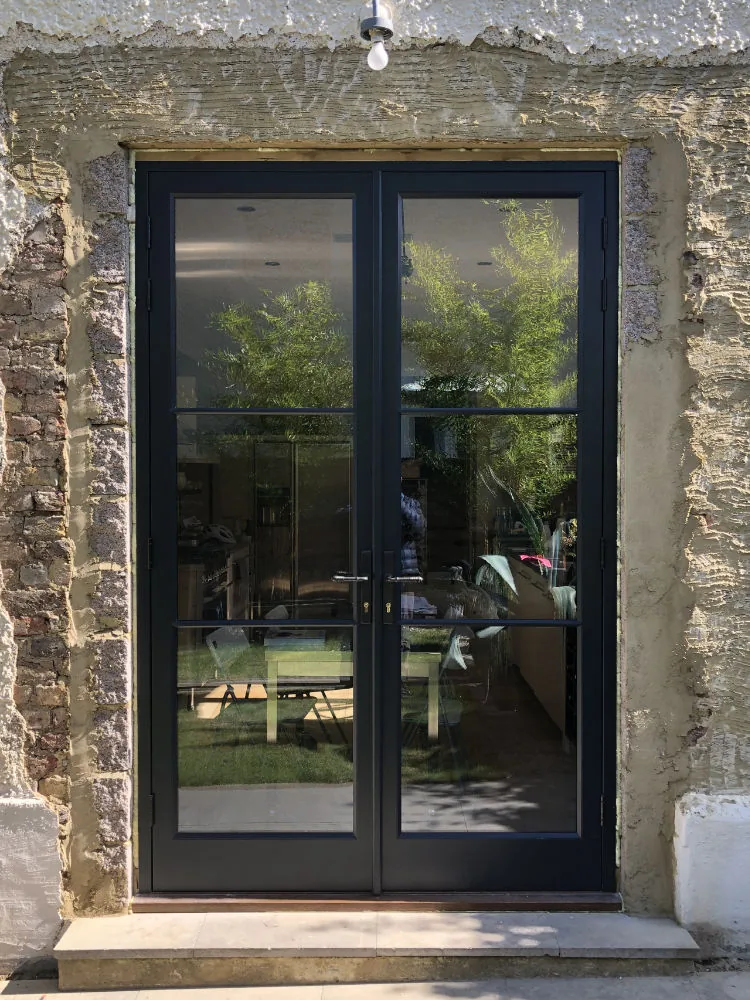
We subsequently returned to the East Sheen property to complete a second phase of work, this time replacing a number of external door sets.
Here, the design took a slightly more contemporary direction.
The new doors were manufactured in timber but designed to evoke the slender proportions and distinctive glazing patterns associated with traditional Crittall-style doors.
Externally, they were finished in a colour matched to Farrow & Ball Railings, providing a strong contrast with the lighter windows and introducing a more contemporary element without looking out of place on the period property.
Ironmongery throughout the project was supplied by From The Anvil, combining traditional styling with the functionality expected from modern windows and doors.
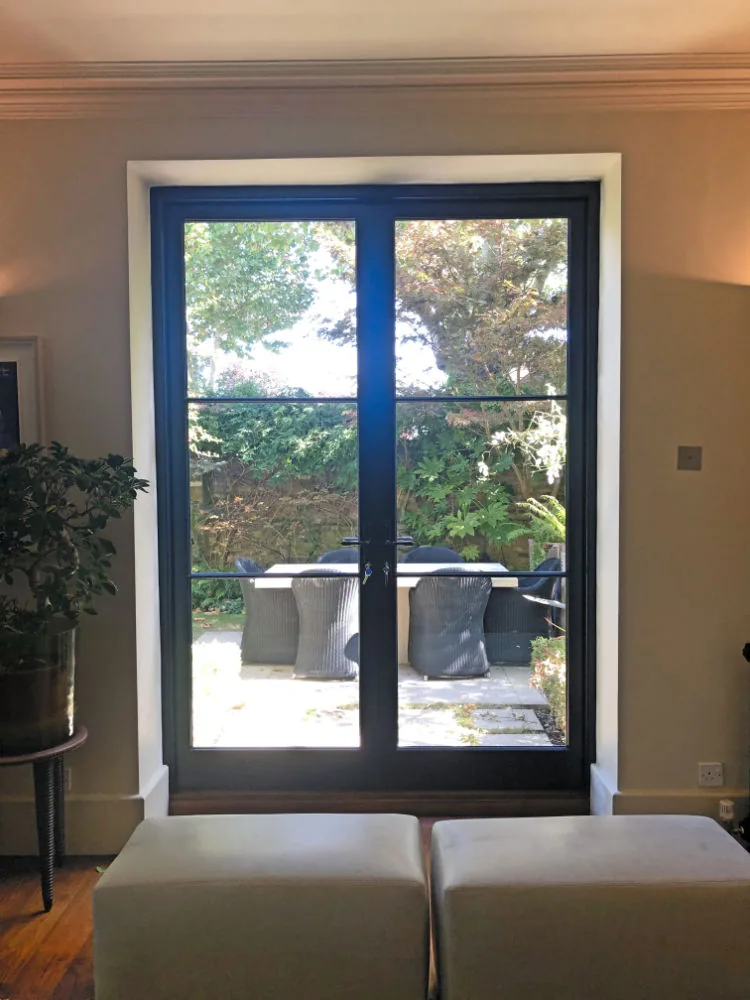
The completed project is a good example of how conservation-area work doesn’t necessarily mean recreating every element of a house exactly as it was. The important part is understanding the building and introducing new elements in a way that complements its character.
We regularly make windows and doors for period homes across Richmond upon Thames, including properties in the borough’s conservation areas. Read more about our timber windows and doors in Richmond, see how we approached a Building of Townscape Merit in Petersham or find out more about our timber casement windows.





2026 Woodland of Kingston Ltd
Woodland of Kingston, St Peters House, 6 Cambridge Rd, Kingston upon Thames KT1 3JY
Registered in England No: 3833894 VAT No: 217 3996 39
Website Design by Nadja


